

By James Wong
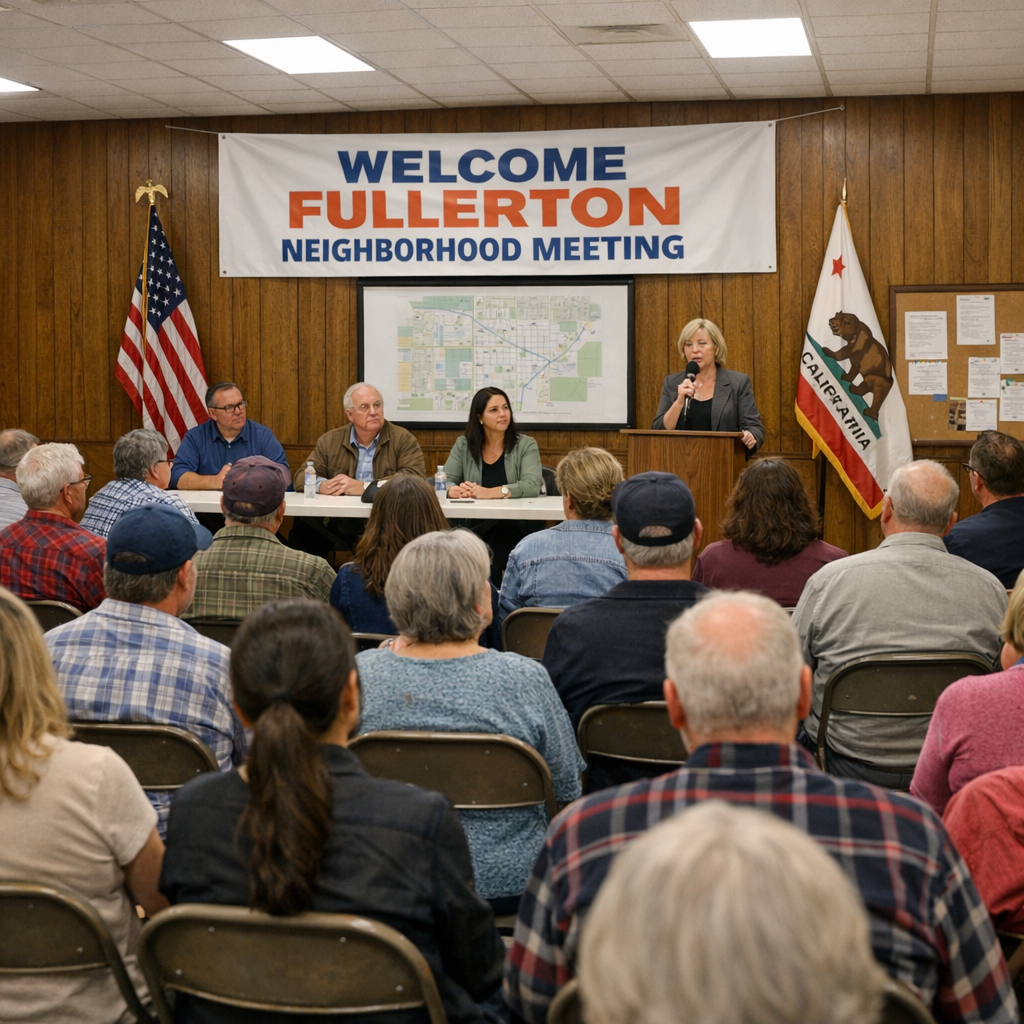
In Fullerton, debates over housing, infrastructure, and community life often dominate council agendas. But beneath the policy discussions, a quieter, persistent issue echoes: who’s invited into the decision-making room?
The gap between public policy and lived experience
Consider neighborhoods like those along Richman Park or adjacent to the Rail District. Residents there have raised concerns about gentrification and displacement, especially among Hispanic and Latino families. They’re asking for mixed-income housing, gathering spaces that reflect the community’s identity, and fairness when surplus land is sold. But the policies that emerge don’t always match those needs, suggesting a mismatch between planning decisions and what people already live through.
Transparency, committees, and citizen power
Citizen committees exist to give communities a formal way to weigh in. But when meetings are reduced, agendas are vague, or evaluations happen behind closed doors, those opportunities shrink faster than most notice. Without clarity, ordinary residents find it harder to understand why decisions are made the way they are—why certain streets remain in disrepair, why transparency feels selective, and why political giving often becomes entangled with land deals.
Trust isn’t just about policies—it’s about process
It’s one thing to propose a housing initiative or a new park; it’s another to build it in a way that feels inclusive. For many in Fullerton, it’s not just what is built but how, where, and through what means. Meaningful participation means bringing voices in early, listening (not just hearing), and being willing to change course when real feedback demands it.
Moving forward: residents as essential partners
- Organize local forums in underrepresented districts so residents can voice priorities before plans are cemented.
- Strengthen committee schedules, mirror neighborhood concerns in citywide surveys, and make minutes easy to access and understand.
- Insist on fair land-sale practices tied to affordable housing; preserve what’s already good in communities while seeking growth.
Fullerton’s future deserves more than top-down plans. Building a truly inclusive city means ensuring every block, every block party, and every voice has a stake—and a seat—at the table.