

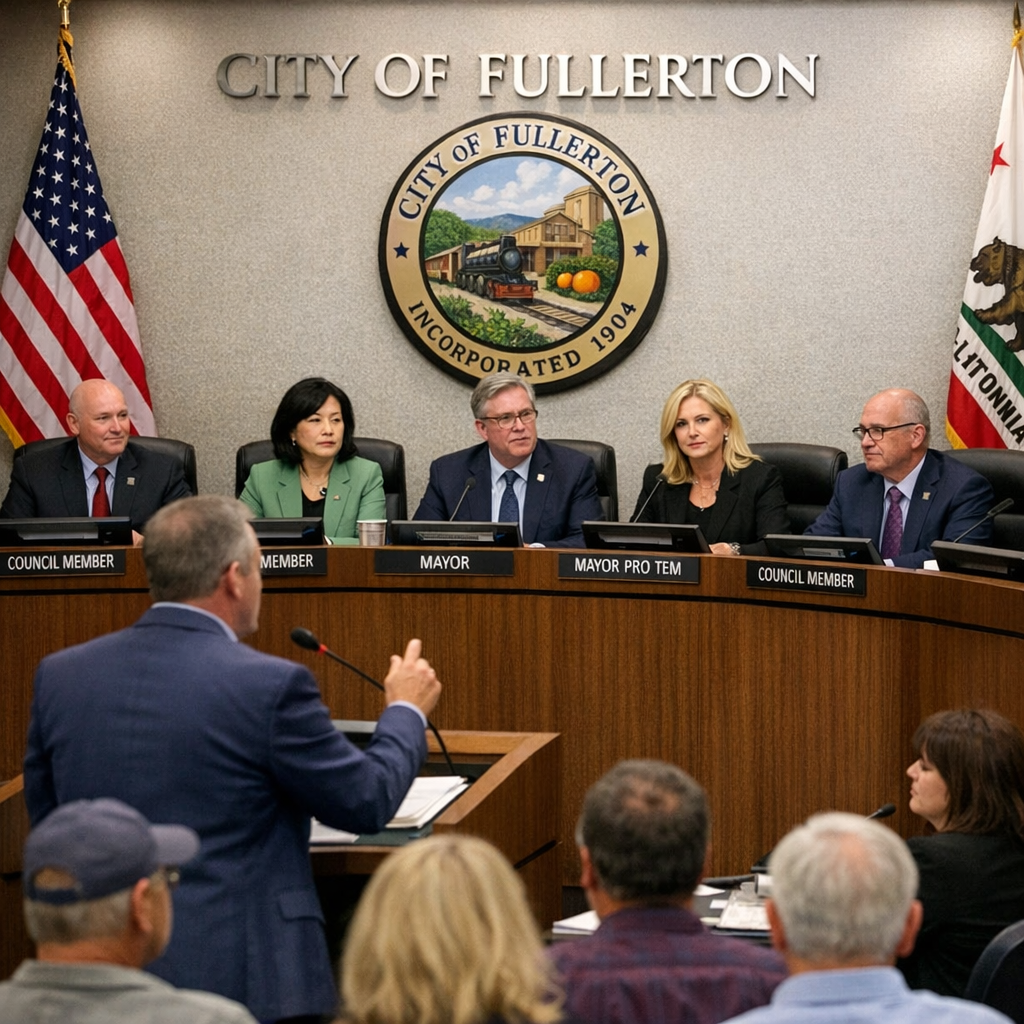
I’m Aaliyah Patel, bringing you the latest from Fullerton City Hall — where major decisions are shaping the city’s long-term direction on housing, infrastructure, and public safety.
Balancing Housing Mandates and Local Realities
Fullerton is still working toward meeting state housing mandates. The city agreed in early 2024 to adopt a compliant Housing Element for the 2021–2029 planning period, which includes delivering more than 13,200 new housing units — over 5,000 of them targeted at low- and very low-income residents. The plan also requires a zoning code overhaul. Officials say some goals are difficult to meet, especially given Fullerton’s density, local opposition, and infrastructure constraints.
In August 2026, Fullerton’s response to an Orange County Grand Jury report noted that state housing targets are “very difficult to meet,” especially for cities like Fullerton already built out. City staff have suggested that housing occupied by students — such as at or near Cal State Fullerton — should count toward those totals, which could ease pressure in certain zones.
Infrastructure Needs Versus Revenue Proposals
At a City Council meeting in July, Fullerton staff proposed putting a sales tax measure on the November ballot to raise funds for street and infrastructure maintenance. That same meeting considered a $180 million tax-exempt bond for two apartment complexes — one of several big fiscal choices under debate as the FY2026–27 budget takes shape.
Although the bond resolution was denied, the infrastructure measure remained under consideration—discussed but not yet adopted. Council members asked staff to clarify where the money would go and what trade-offs might be involved.
Public Safety and Community Priorities
Public safety remains at the top of community concerns. Surveys consistently identify homelessness, street conditions, and cost of living as serious issues for many residents. Crime, gangs, and property offenses are also ongoing worries — especially in neighborhoods where residents report feeling less safe, citing poor lighting, vandalism, lack of trust in law enforcement, and slow response times.
To address these challenges, Fullerton is increasing emphasis on programs like Crime Prevention Through Environmental Design, Neighborhood Watch, and better community engagement efforts. The city’s Five-Year Consolidated Plan (2025–2030) is seeking resident input on which issues matter most when allocating federal funds for housing, public services, and infrastructure.
What to Watch Next
- How Fullerton responds to the Grand Jury and state demands for a revised plan on housing compliance.
- Whether the sales tax proposal for streets and infrastructure makes it to the ballot and how it’s framed to voters.
- Updates on police staffing, neighborhood safety programs, and funding sources tied to public safety.
- The outcome of the city’s Consolidated Plan survey, which will guide resource distribution through 2030.
As Fullerton navigates these decisions, the voices of residents — renters and homeowners alike — are crucial. I’ll keep watching Fullerton City Council and key city departments to bring you updates on how policies affect our homes, streets, and safety.