

By James Wong
Listening Through the Doors
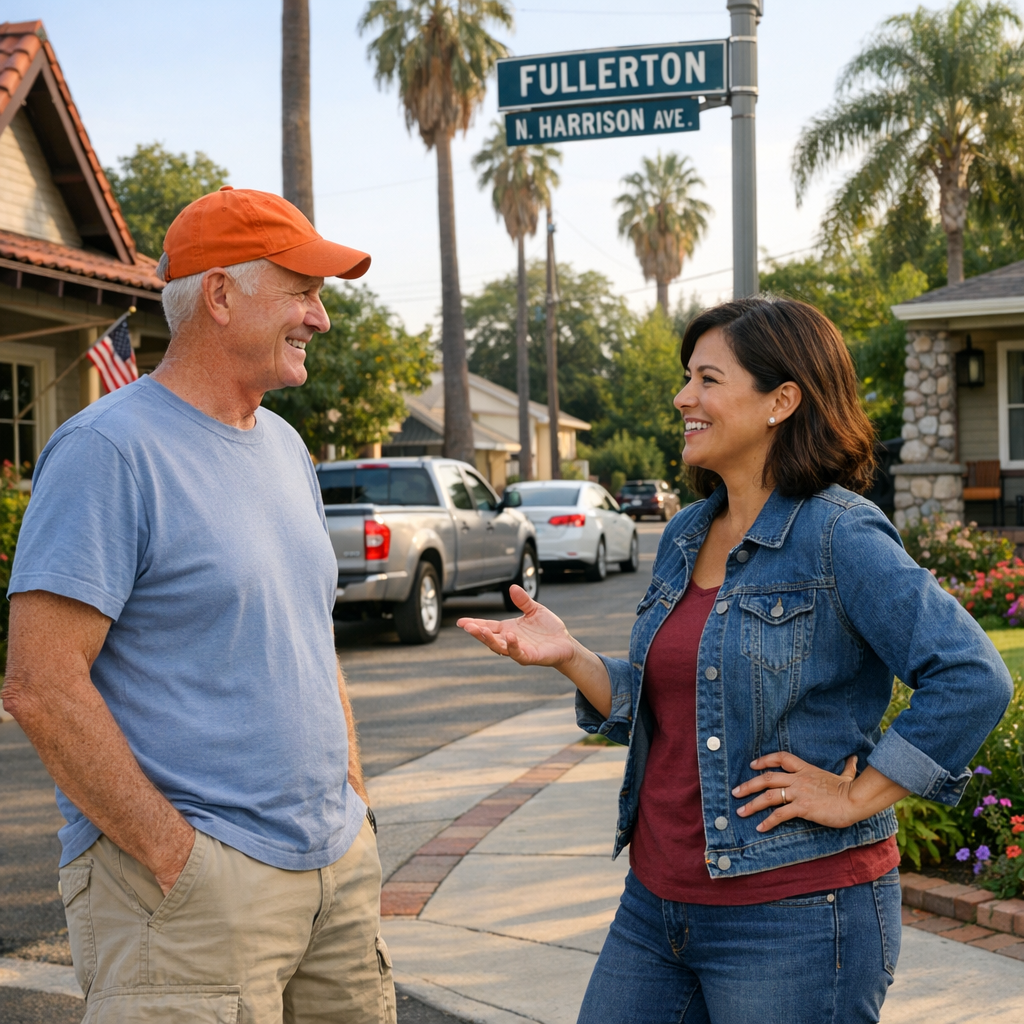
Recently, local organizers with OCCCO led an experiment: canvassers from South Fullerton walked door-to-door for several weeks, asking neighbors what they love about their neighborhoods, what they hope for—and what’s getting in the way. What emerged was not just a list of needs, but a portrait of two parts of the same city that often feel apart. My family lives in North Fullerton; I’ve spent time growing up in South Fullerton. The gaps I heard confirmed what many already suspect: we may share borders, but we don’t always share trust, attention or power.
What we love—and where we sense danger
There was so much that people said they still find beautiful about Fullerton: the mature trees in Hillcrest, the beats of local music downtown, neighborhood Fourth of July cookouts, and Cal State Fullerton’s lively energy. But alongside those praises came deep concern.
Top worries across both sides of town included rough roads and crumbling sidewalks—some streets so damaged that the rumbling under car tires feels like punishment rather than commute. Homelessness and public safety came up frequently, especially in South Fullerton, where many people said dealing with substance misuse and public disorder feels constant. Others spoke of a real fear that their voices are overlooked when budget priorities are decided.
The North-South Divide
What surprised many organizers was how strongly the sense of divide showed up when South Fullerton residents spoke, but how subtle it was in perceptions from the north. In the words of a canvasser: “South Fullerton folks feel the divide deeply. North Fullerton folks, less so.” That asymmetry seemed to reveal both invisibility and imbalance: South residents feel unheard, underfunded, and distant from decisions made downtown.
On representation and power
Residents question how much the city council truly represents them. For many, councilmakers—or those suggesting charter changes—feel far away from the daily challenges of aging infrastructure or overwhelmed city services. The idea of becoming a charter city has raised alarms: what looks like governance reform on paper sometimes feels like an opening for greater power centralization, without guarantees of more resident input.
Toward What We Hope For
Even among the challenges, the conversations kept returning to hope. Hope to see more attention paid to road repairs, especially in residential neighborhoods. Hope for public spaces—parks, lighting, maintenance—that feel safe and inviting. Hope for more listening leaders: councilmembers who walk the wards, who hear stories from every block, not just the easiest voices to reach.
We also heard repeated calls for creating “a bigger we” in Fullerton. Spaces where North and South come together—not just at festivals, but in conversations about home. Where equity means all of us feel heard and none of us feels left behind.
What Can Residents Do—Together?
Here are some steps individuals and groups in Fullerton might take to move toward that shared vision:
- Attend and speak at council meetings—and band together with neighbors. Numbers and stories matter.
- Organize listening sessions—not to persuade, but to understand what’s going on in every neighborhood.
- Engage neighborhood associations and city commissions to press for equitable infrastructure spending.
- Vote with equity in mind: support candidates and measures committed to fairer public service distribution and responsive, transparent governance.
It’s easy to fall into frustration—roads too bumpy, meetings too distant, decisions too opaque. But I believe Fullerton has something powerful: a caring community. If we choose to listen—not just to those who shout loudest, but to those who’ve long been quieter—maybe we can begin closing the gaps. Because what a city is, at its best, is not just its roads or parks—it’s the sum of the people who believe they belong.*
*A note: comments shared here reflect what was heard from residents during recent canvassing efforts in Fullerton; I aim only to uplift voices, not to attribute blame.