

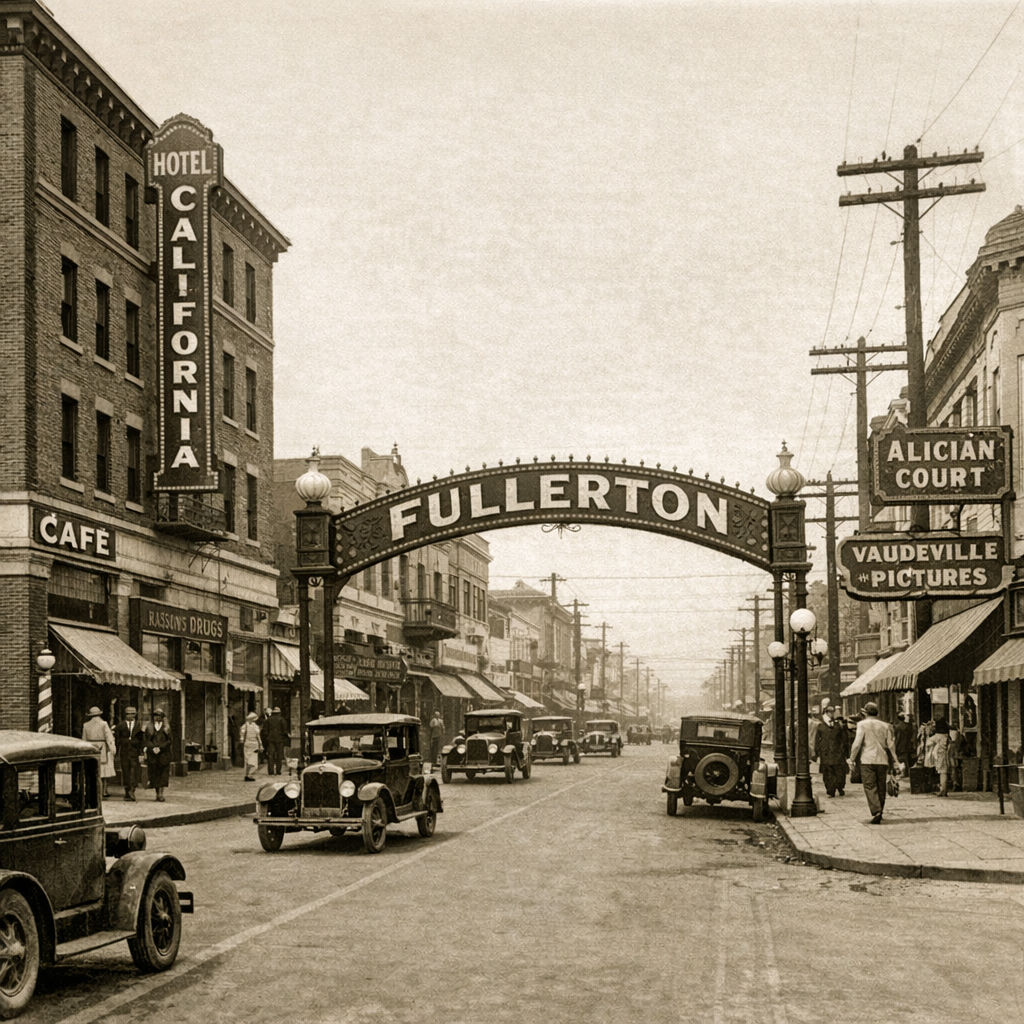
Fullerton, California, boasts a rich history that reflects the broader narrative of Southern California’s development. From its indigenous origins to its current status as a vibrant city, Fullerton’s journey is a testament to resilience and growth.
Indigenous Beginnings
Long before European settlers arrived, the area now known as Fullerton was home to the Tongva people. They established villages along the Santa Ana River, with Hutuknga being one of the largest in the region. The Tongva thrived by cultivating acorns and seeds, and they maintained extensive trade networks with coastal and inland communities.
Spanish Exploration and Settlement
In 1769, Spanish explorer Gaspar de Portolá led an expedition through the area, marking the beginning of European influence. The establishment of the Mission San Gabriel Arcángel introduced new agricultural practices and began a period of significant change for the indigenous populations.
Founding of Fullerton
The late 19th century saw the arrival of George and Edward Amerige, brothers from Massachusetts, who founded Fullerton in 1887. They named the city after George H. Fullerton, president of the Pacific Land and Improvement Company, who played a pivotal role in bringing the Santa Fe Railway to the area. This development spurred economic growth, particularly in the citrus industry, positioning Fullerton as a key player in Southern California’s agricultural sector.
Economic Expansion and Cultural Development
The discovery of oil in the 1890s further boosted Fullerton’s economy, leading to a population surge and a building boom in the 1920s. Iconic structures like the Fox Theatre (1925) and the California Hotel (1922) were erected during this period, reflecting the city’s prosperity. However, it’s important to acknowledge that many housing developments at the time included racially restrictive covenants, limiting property ownership to certain groups and highlighting the era’s social challenges.
Modern Fullerton
Today, Fullerton is a dynamic city that honors its past while embracing the future. The Fullerton Public Library’s Local History Room offers residents and visitors a chance to delve into the city’s rich heritage through archives and exhibits. Additionally, the city hosts numerous community events, such as the Wednesday Certified Farmers’ Market, fostering a sense of community and continuity.
Understanding Fullerton’s history allows us to appreciate the diverse influences that have shaped our city. By reflecting on our past, we can build a more inclusive and vibrant future for all residents.